Customers rarely make a purchase after seeing an ad for the first time.
They may discover a product on TikTok, learn more on Facebook, search for the brand on Google, and eventually visit the website to complete their purchase.
This shows that the customer journey increasingly takes place across multiple platforms. Each channel plays a different role in building awareness, nurturing interest, and driving conversions.
Let’s explore the key roles of each platform with Nolimit Topup!
1. ADVERTISING IN THE MULTI-PLATFORM CUSTOMER JOURNEY
Customers may interact with a brand across multiple touchpoints before making a purchase:
- TikTok Ads: Create awareness and reach new audiences.
- Meta Ads: Maintain engagement, build trust, and support remarketing.
- Google Ads: Capture search intent and support conversions.
- Website/E-commerce Platform: Complete the purchase.
Not every customer follows the same journey. Businesses should identify which channels create awareness, which support consideration, and which drive conversions.
2. TIKTOK ADS: CREATING DEMAND BEFORE SEARCH
TikTok Ads are effective at the early stage of the customer journey, when users may not be actively searching for a product.
Short-form videos help brands capture attention, reach new audiences, and test different content angles.
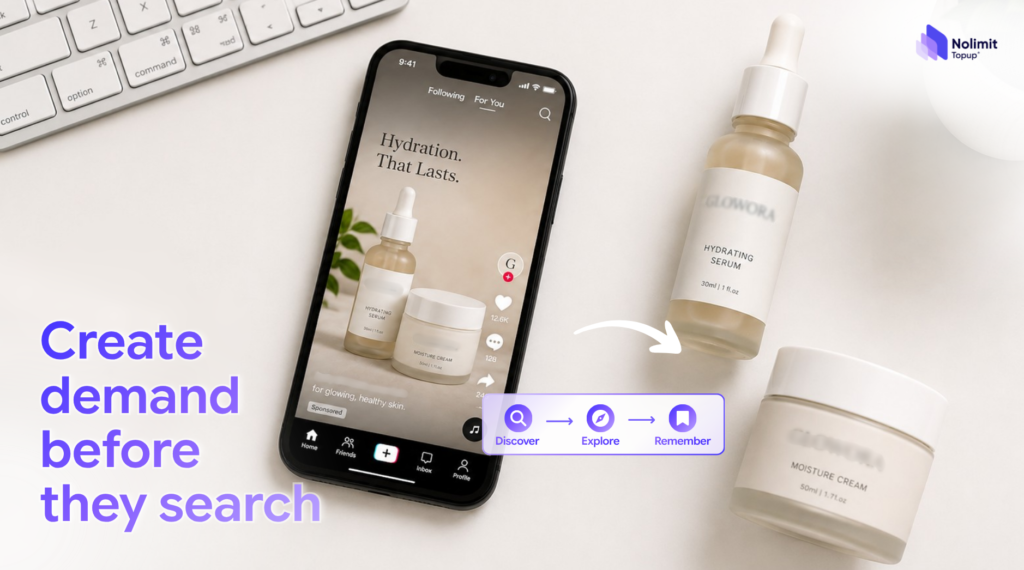
Businesses can track video views, engagement, website visits, and brand searches alongside direct sales to better evaluate TikTok’s contribution.
Creative is also important. Content should feel natural, get to the point quickly, and fit the way users consume short-form videos.
3. META ADS: MAINTAINING CUSTOMER ENGAGEMENT
Meta Ads, including Facebook and Instagram, are useful for staying connected with people who already know or have interacted with the brand.
Businesses can use Meta Ads to:
- Introduce products and key benefits.
- Share reviews and real customer experiences.
- Remarket to website visitors.
- Reach people who watched videos or engaged with the brand.
- Remind users about products they added to their cart.
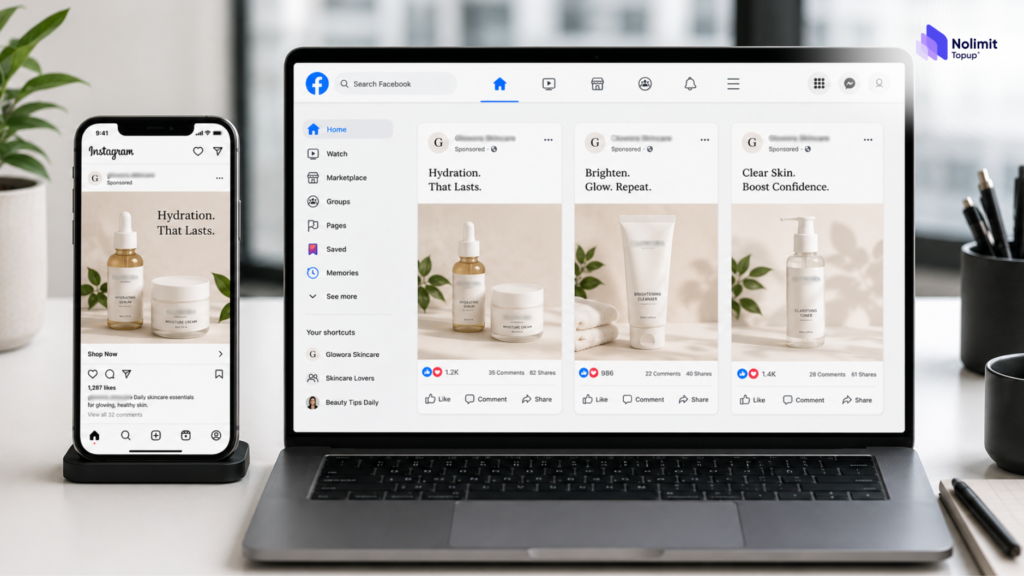
For remarketing, businesses should monitor Frequency and refresh creatives regularly to avoid repetitive ad exposure.
4. GOOGLE ADS: DRIVING CONVERSIONS WITH SEARCH INTENT
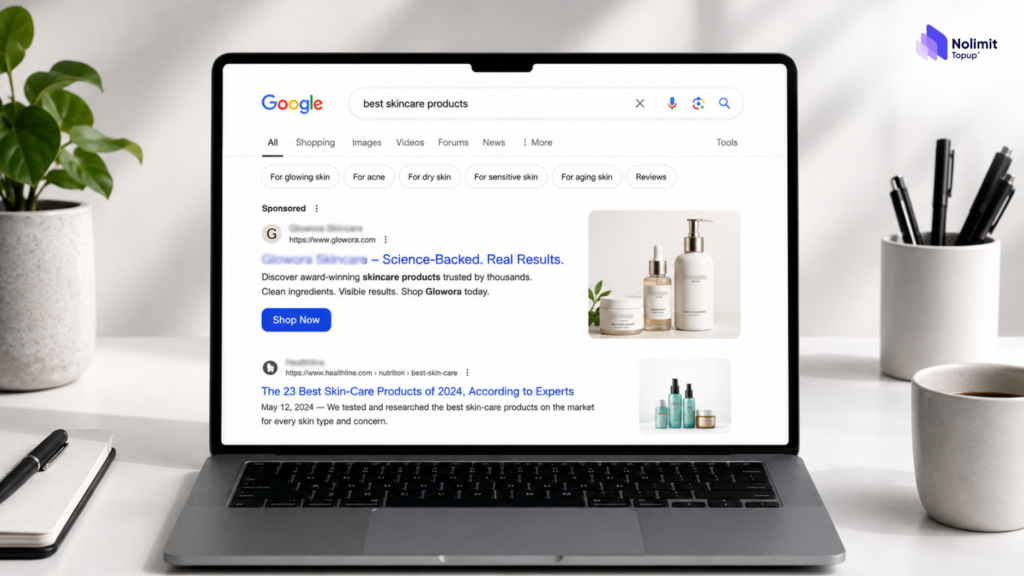
Google Ads reaches users when they already have a need and are actively searching for information.
Businesses can target branded keywords, product searches, purchase-intent queries, and comparison searches.
However, a Google search may be triggered by earlier touchpoints on TikTok or Meta. Therefore, each channel should not be evaluated completely in isolation.
5. ADVERTISING BUDGET ALLOCATION AND INFRASTRUCTURE
Businesses do not need to split their budget equally across every platform. Budget allocation should reflect the objectives and role of each channel.
When managing multiple platforms, businesses also need to monitor budgets, balances, account status, and user access effectively.
If additional advertising infrastructure is needed, businesses can consider Nolimit Topup‘s rented ad accounts for Meta Ads, Google Ads, or TikTok Ads.
However, ad accounts are only a supporting solution; performance still depends on strategy, budget allocation, and channel optimization.
CONCLUSION
Multi-platform advertising is not about running ads on as many channels as possible. It is about giving each platform the right role in the customer journey.
TikTok Ads create awareness, Meta Ads maintain engagement, and Google Ads capture conversion intent.
When these channels work together and budgets are allocated strategically, businesses can make better use of every customer touchpoint.
Leave a Reply