Expanding Google Ads budgets is the goal of most E-commerce businesses as revenue starts to grow.
However, in many cases, budgets double while profits fail to increase accordingly, or ROAS even drops after a few weeks.
So what is the cause, and how can you scale Google Ads effectively when operating across multiple product categories?
WHY DOES SCALING GOOGLE ADS NOT SIMPLY MEAN INCREASING BUDGETS?
When budgets expand, Google Ads distributes ads to more auction rounds and reaches new customer segments. This means advertising costs can rise if data and campaign structures are not optimized enough.
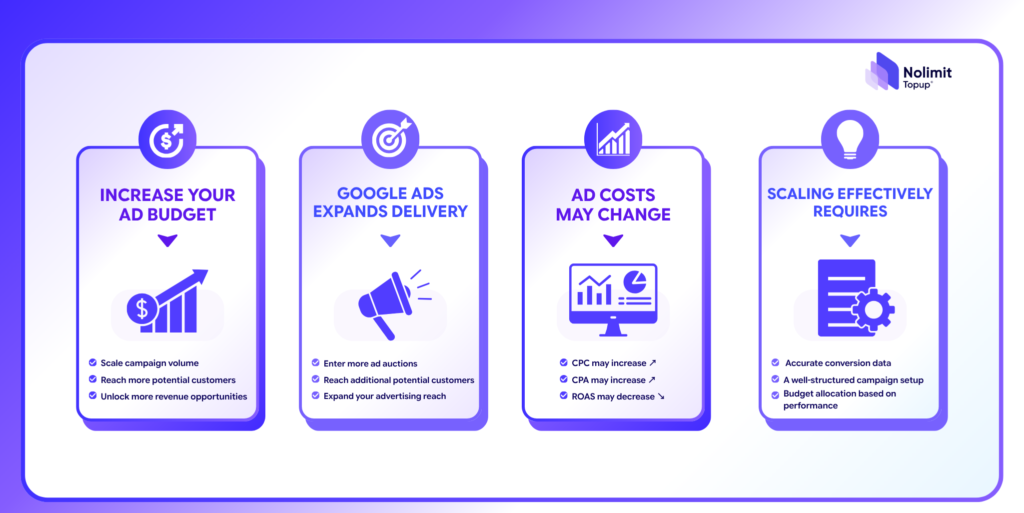
Some signs indicating a business is scaling incorrectly include:
- ROAS drops immediately after increasing budget.
- Cost per conversion rises continuously.
- Budgets are poured into low-margin product groups.
- Revenue increases, but profit margins do not improve.
KEY FACTORS DETERMINING GOOGLE ADS SCALABILITY
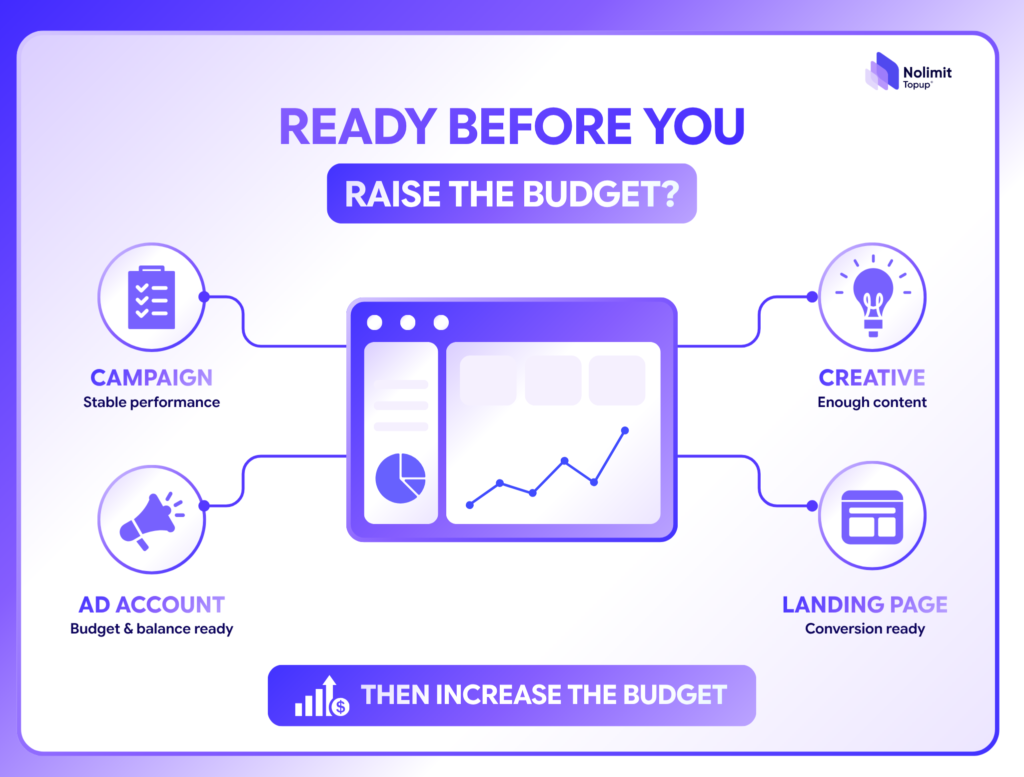
Before expanding budgets, businesses should comprehensively evaluate business efficiency rather than focusing solely on order counts.
Priority factors to evaluate include:
- ✅ Accurate conversion data.
- ✅ ROAS higher than the break-even point.
- ✅ Sufficient inventory to meet demand.
- ✅ Stable website operations and order processing workflows.
- ✅ Distinct profit targets for each category.
For multi-category E-commerce, you should not apply a single blanket ROAS target across your entire product catalog.
HOW DOES CAMPAIGN STRUCTURE IMPACT SCALING?
A common mistake is grouping all products into a single Google Ads campaign.
This makes it difficult for the system to allocate budgets reasonably and complicates evaluating performance for each individual category.
Instead, campaigns should be segmented by:
- Product groups.
- Profit margins.
- Average order value (AOV).
- Seasonality.
- Business objectives.
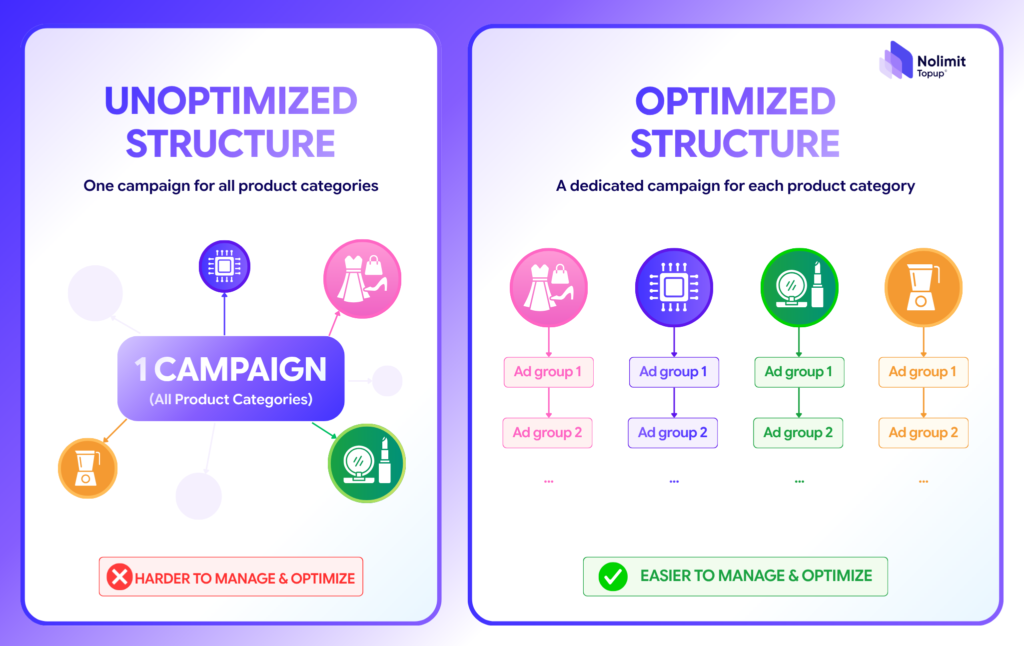
A clear structure makes expanding budgets much easier to control.
AS SCALE GROWS, GOOGLE ADS INFRASTRUCTURE MUST ALSO EXPAND
When a business deploys multiple brands or enters multiple markets simultaneously, managing Google Ads accounts becomes far more complex.
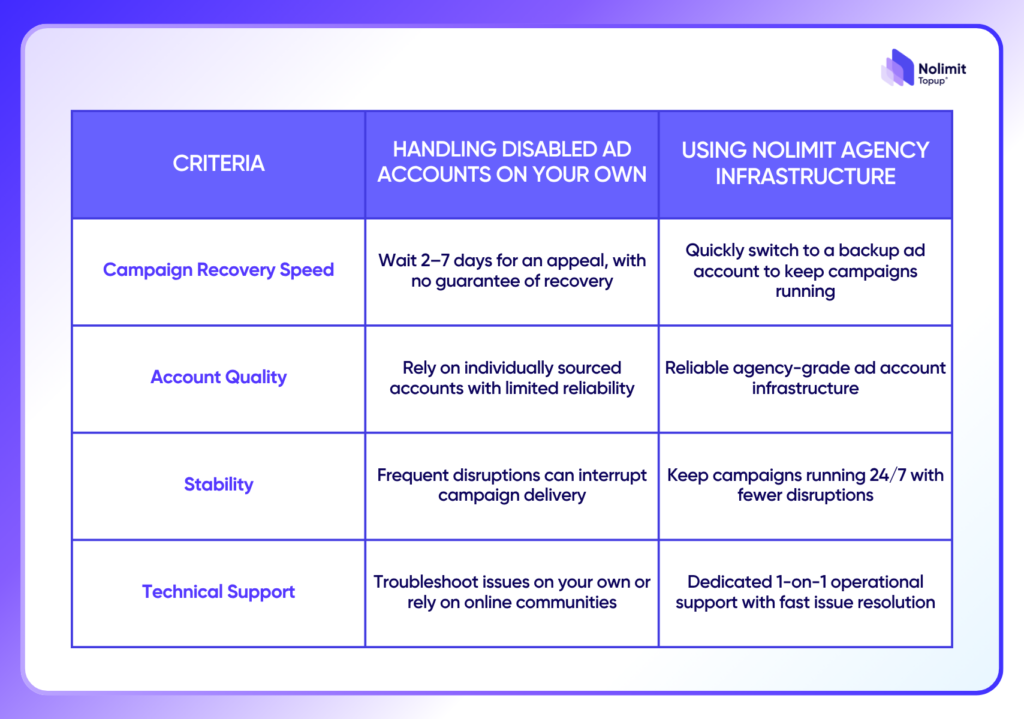
At this point, many businesses choose to utilize Google Ads agency accounts or rent Google Ads accounts to:
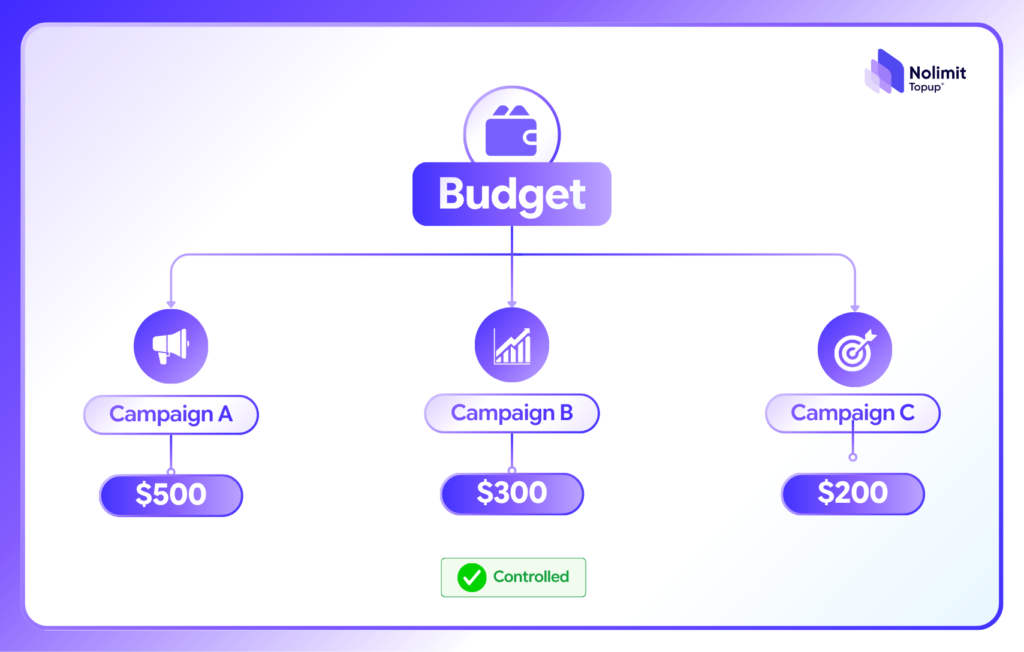
- Segregate budgets clearly.
- Manage individual campaign groups separately.
- Proactively launch new projects.
- Minimize impact when a single account encounters issues.
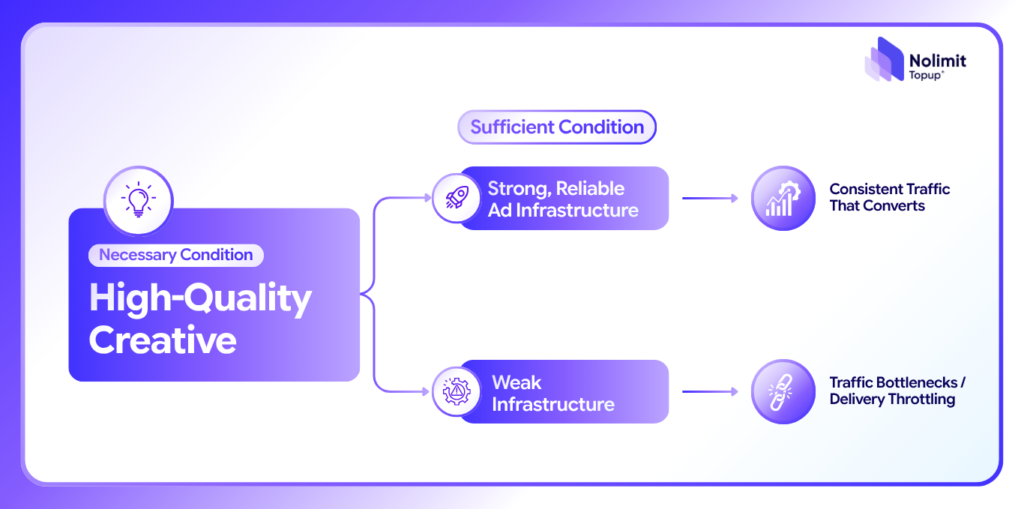
Using the right infrastructure ensures a more stable expansion process, especially for multi-category enterprises.
NOLIMIT TOPUP – PARTNERING WITH ENTERPRISES IN SCALING GOOGLE ADS
Scaling Google Ads is not just about increasing spend; it is a calculation involving data, campaign structure, and ad infrastructure.
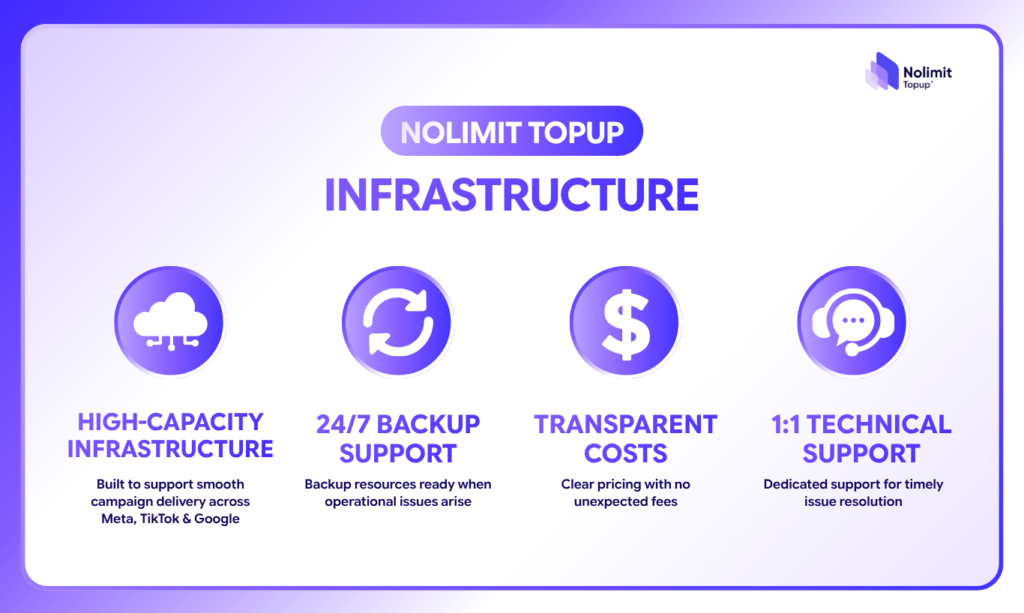
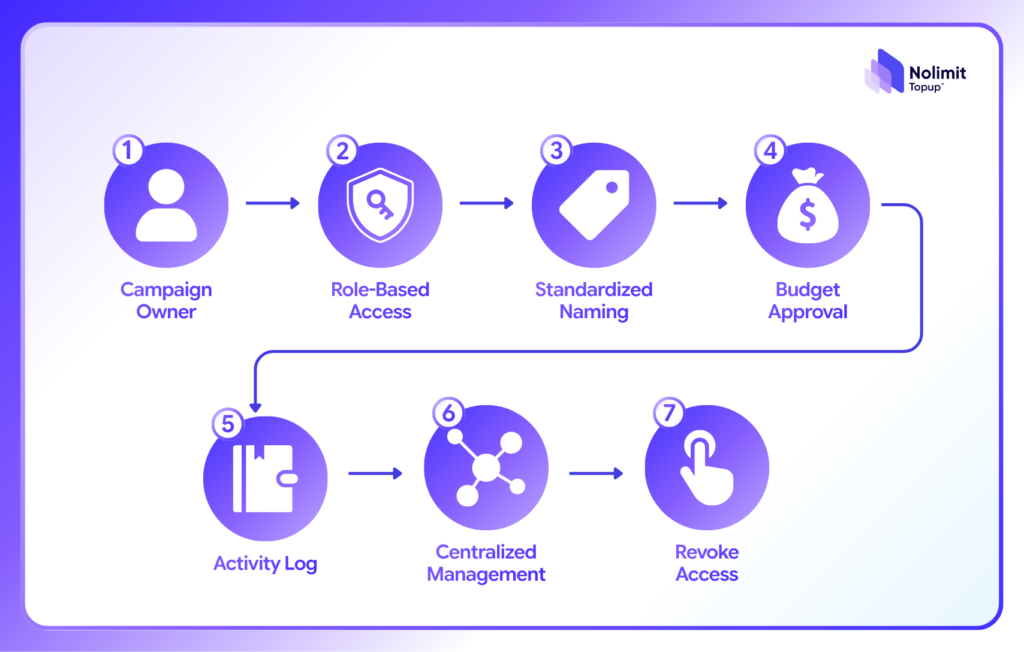
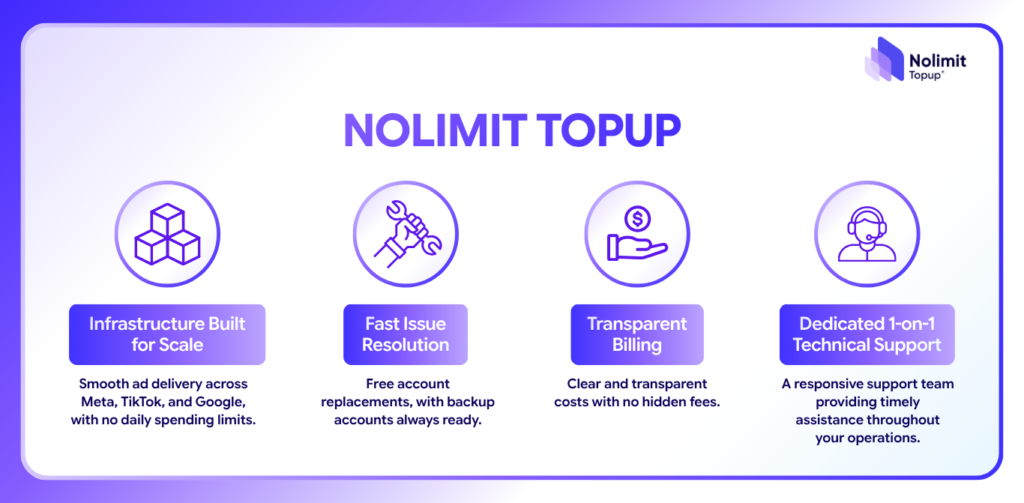
Nolimit Topup supports businesses in building suitable advertising systems for every growth stage – from account management and Google Ads infrastructure supplementation to operational process optimization.
As a result, businesses can expand campaigns more effectively while maintaining firm control over budgets and profit margins.
CONCLUSION
Successful Google Ads scaling is not measured by the amount of money spent, but by the ability to grow revenue alongside sustainable profits.
If your business is preparing to expand multi-category E-commerce advertising, ensure that your data, campaign structures, and account infrastructure are fully prepared before scaling budgets.